Etruscans – Pelasgians (Tyrrhenians)
Etruscans – Pelasgians (Tyrrhenians)
Hellanicus of Lesbos, a contemporary of Herodotus, placed the homeland of the Etruscans in the Aegean world. Strabo, preserving older Greek traditions and referring to Hellanicus, connects the Tyrrhenians with the Pelasgians and places them within the same broader group as the populations of Lemnos and Imbros. In some traditions, the people of Lemnos are even called Tyrrhenians, showing that already in antiquity there was a memory of kinship between the northern Aegean and Etruria.
Hellanicus of Lesbos, a contemporary of Herodotus, placed the homeland of the Etruscans in the Aegean world. Strabo, preserving older Greek traditions and referring to Hellanicus, connects the Tyrrhenians with the Pelasgians and places them within the same broader group as the populations of Lemnos and Imbros. In some traditions, the people of Lemnos are even called Tyrrhenians, showing that already in antiquity there was a memory of kinship between the northern Aegean and Etruria.
In both Greek and Etruscan
mythological tradition appears Tyrrhenus, the eponymous ancestor
of the Tyrrhenians. According to Dionysius of Halicarnassus,
Tyrrhenus was the brother of Lydus, the ancestral figure of the
Lydians. Herodotus likewise connects the Lydians with other
peoples of western Asia Minor, such as the Carians and Lycians,
presenting a shared eastern Aegean cultural sphere.
According to tradition, Tyrrhenus departed from Lydia and crossed into Italy, where he settled with his followers. There he became king and gave his name both to the people (Tyrrhenians) and to the land.
According to tradition, Tyrrhenus departed from Lydia and crossed into Italy, where he settled with his followers. There he became king and gave his name both to the people (Tyrrhenians) and to the land.
Writing and the Alphabet
Of special importance is the fact that the Etruscans used an alphabet of Greek origin, related to the western Greek alphabet associated with Euboea and Cumae in Italy. This means that:
there was close contact between Greeks and Etruscans,
the Etruscans adopted a Greek writing system for their own language,
the Latin alphabet was later influenced through the Etruscan script.
So when we speak of the Etruscans and the Aegean, we are not dealing only with myths, but also with real cultural evidence, such as writing, trade connections, and ancient memories of common origins.
Lemnos as a Key Piece of Evidence
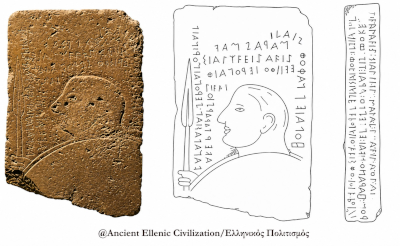
The famous Stele of Kaminia on Lemnos, bearing an inscription in a language related to Etruscan and written in a script similar to the Greek alphabet, is one of the most important pieces of evidence for a connection between the Aegean world and the Tyrrhenians.
Conclusion
Of special importance is the fact that the Etruscans used an alphabet of Greek origin, related to the western Greek alphabet associated with Euboea and Cumae in Italy. This means that:
there was close contact between Greeks and Etruscans,
the Etruscans adopted a Greek writing system for their own language,
the Latin alphabet was later influenced through the Etruscan script.
So when we speak of the Etruscans and the Aegean, we are not dealing only with myths, but also with real cultural evidence, such as writing, trade connections, and ancient memories of common origins.
Lemnos as a Key Piece of Evidence
The famous Stele of Kaminia on Lemnos, bearing an inscription in a language related to Etruscan and written in a script similar to the Greek alphabet, is one of the most important pieces of evidence for a connection between the Aegean world and the Tyrrhenians.
Conclusion
The ancient Greeks did not regard
the Etruscans as a completely foreign and unrelated people.
Rather, they placed them within the wider world of the ancient
Aegean peoples — the Pelasgians and Tyrrhenians. Their language
may have been distinct, yet traditions, writing systems, and
archaeological evidence all suggest that their ties with the
Aegean were deep and very ancient.
1. The column of Kaminia in Lemnos, the tombstone representing an Etruscan warrior, bears an inscription in Etruscan script (similar to the Greek alphabet) and was found in 1885 in the village of Kaminia, and then after many adventures was donated to the National Archaeological Museum where there is yet.
-----------------------
Ετρούσκοι – Πελασγοί (Τυρρηνοί)
Ο Ελλάνικος ο Λέσβιος, σύγχρονος του Ηροδότου, τοποθετούσε την κοιτίδα των Ετρούσκων στον χώρο του Αιγαίου. Ο Στράβων, μεταφέροντας παλαιότερες ελληνικές παραδόσεις και αναφέροντας τον Ελλάνικο, συνδέει τους Τυρρηνούς με τους Πελασγούς και τους κατατάσσει στην ίδια ευρύτερη ομάδα με πληθυσμούς της Λήμνου και της Ίμβρου. Μάλιστα, σε ορισμένες παραδόσεις οι Λήμνιοι αποκαλούνται Τυρρηνοί, κάτι που δείχνει ότι ήδη από την αρχαιότητα υπήρχε μνήμη συγγένειας ανάμεσα στο βόρειο Αιγαίο και την Ετρουρία.
1. The column of Kaminia in Lemnos, the tombstone representing an Etruscan warrior, bears an inscription in Etruscan script (similar to the Greek alphabet) and was found in 1885 in the village of Kaminia, and then after many adventures was donated to the National Archaeological Museum where there is yet.
-----------------------
Ετρούσκοι – Πελασγοί (Τυρρηνοί)
Ο Ελλάνικος ο Λέσβιος, σύγχρονος του Ηροδότου, τοποθετούσε την κοιτίδα των Ετρούσκων στον χώρο του Αιγαίου. Ο Στράβων, μεταφέροντας παλαιότερες ελληνικές παραδόσεις και αναφέροντας τον Ελλάνικο, συνδέει τους Τυρρηνούς με τους Πελασγούς και τους κατατάσσει στην ίδια ευρύτερη ομάδα με πληθυσμούς της Λήμνου και της Ίμβρου. Μάλιστα, σε ορισμένες παραδόσεις οι Λήμνιοι αποκαλούνται Τυρρηνοί, κάτι που δείχνει ότι ήδη από την αρχαιότητα υπήρχε μνήμη συγγένειας ανάμεσα στο βόρειο Αιγαίο και την Ετρουρία.
Στην ελληνική και ετρουσκική
μυθολογική παράδοση εμφανίζεται ο Τύρρηνος, επώνυμος γενάρχης των
Τυρρηνών. Σύμφωνα με τον Διονύσιο τον Αλικαρνασσέα, ο Τύρρηνος
ήταν αδελφός του Λύδου, γενάρχη των Λυδών. Ο Ηρόδοτος επίσης
συνδέει τους Λυδούς με άλλους λαούς της δυτικής Μικράς Ασίας, όπως
Κάρες και Λύκιους, παρουσιάζοντας έναν κοινό ανατολικοαιγαιακό
κόσμο.
Κατά την παράδοση, ο Τύρρηνος αναχώρησε από τη Λυδία και πέρασε στην Ιταλία, όπου εγκαταστάθηκε με τους ακολούθους του. Εκεί έγινε βασιλιάς και έδωσε το όνομά του τόσο στον λαό (Τυρρηνοί) όσο και στη χώρα.
Κατά την παράδοση, ο Τύρρηνος αναχώρησε από τη Λυδία και πέρασε στην Ιταλία, όπου εγκαταστάθηκε με τους ακολούθους του. Εκεί έγινε βασιλιάς και έδωσε το όνομά του τόσο στον λαό (Τυρρηνοί) όσο και στη χώρα.
Η γραφή και το αλφάβητο
Ιδιαίτερη σημασία έχει ότι οι Ετρούσκοι χρησιμοποιούσαν αλφάβητο ελληνικής προέλευσης, συγγενές με το δυτικό ελληνικό αλφάβητο που συνδέεται με την Εύβοια και την Κύμη της Ιταλίας. Αυτό σημαίνει πως:
υπήρχε στενή επαφή Ελλήνων και Ετρούσκων,
οι Ετρούσκοι υιοθέτησαν ελληνικό σύστημα γραφής για τη δική τους γλώσσα,
από το ετρουσκικό αλφάβητο επηρεάστηκε αργότερα και το λατινικό.
Άρα, όταν μιλάμε για Ετρούσκους και Αιγαίο, δεν αναφερόμαστε μόνο σε μύθους, αλλά και σε πραγματικά πολιτισμικά ίχνη, όπως η γραφή, οι εμπορικές επαφές και οι αρχαίες μνήμες κοινής καταγωγής.
Ιδιαίτερη σημασία έχει ότι οι Ετρούσκοι χρησιμοποιούσαν αλφάβητο ελληνικής προέλευσης, συγγενές με το δυτικό ελληνικό αλφάβητο που συνδέεται με την Εύβοια και την Κύμη της Ιταλίας. Αυτό σημαίνει πως:
υπήρχε στενή επαφή Ελλήνων και Ετρούσκων,
οι Ετρούσκοι υιοθέτησαν ελληνικό σύστημα γραφής για τη δική τους γλώσσα,
από το ετρουσκικό αλφάβητο επηρεάστηκε αργότερα και το λατινικό.
Άρα, όταν μιλάμε για Ετρούσκους και Αιγαίο, δεν αναφερόμαστε μόνο σε μύθους, αλλά και σε πραγματικά πολιτισμικά ίχνη, όπως η γραφή, οι εμπορικές επαφές και οι αρχαίες μνήμες κοινής καταγωγής.
Η Λήμνος ως κρίσιμο στοιχείο
Η περίφημη στήλη των Καμινίων στη Λήμνο, με επιγραφή σε γλώσσα συγγενική προς την ετρουσκική και γραφή παρόμοια με ελληνικό αλφάβητο, αποτελεί ένα από τα σημαντικότερα τεκμήρια για τη σχέση Αιγαίου και Τυρρηνών.
Συμπέρασμα
Οι αρχαίοι Έλληνες δεν θεωρούσαν τους Ετρούσκους ξένο και άσχετο λαό, αλλά τους ενέτασσαν στον ευρύτερο κόσμο των παλαιών αιγαιακών λαών, των Πελασγών και των Τυρρηνών. Η γλώσσα τους μπορεί να ήταν ιδιαίτερη, όμως οι παραδόσεις, η γραφή και τα αρχαιολογικά στοιχεία δείχνουν ότι οι δεσμοί τους με το Αιγαίο ήταν βαθιοί και παλαιότατοι.
Η περίφημη στήλη των Καμινίων στη Λήμνο, με επιγραφή σε γλώσσα συγγενική προς την ετρουσκική και γραφή παρόμοια με ελληνικό αλφάβητο, αποτελεί ένα από τα σημαντικότερα τεκμήρια για τη σχέση Αιγαίου και Τυρρηνών.
Συμπέρασμα
Οι αρχαίοι Έλληνες δεν θεωρούσαν τους Ετρούσκους ξένο και άσχετο λαό, αλλά τους ενέτασσαν στον ευρύτερο κόσμο των παλαιών αιγαιακών λαών, των Πελασγών και των Τυρρηνών. Η γλώσσα τους μπορεί να ήταν ιδιαίτερη, όμως οι παραδόσεις, η γραφή και τα αρχαιολογικά στοιχεία δείχνουν ότι οι δεσμοί τους με το Αιγαίο ήταν βαθιοί και παλαιότατοι.