|
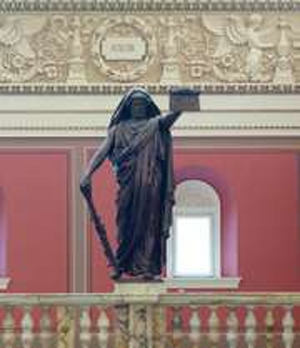 Solon’s
laws, constitutional and judicial reforms instituted by the
Athenian statesman and poet Solon probably 20 years after he
served as archon (annual chief ruler) in 594 bce. Responding
to the early 6th-century Athenian conflict between the
landed aristocracy and peasantry, Solon was called upon to
mediate the inequities that denied government participation
even to the intermediate classes of craftsmen, merchants,
and farmers. Solon’s
laws, constitutional and judicial reforms instituted by the
Athenian statesman and poet Solon probably 20 years after he
served as archon (annual chief ruler) in 594 bce. Responding
to the early 6th-century Athenian conflict between the
landed aristocracy and peasantry, Solon was called upon to
mediate the inequities that denied government participation
even to the intermediate classes of craftsmen, merchants,
and farmers.
Solon’s economic reforms, known as the “shaking off of
burdens,” dealt with one of the immediate causes of the
crisis: debt. All debts were cancelled, enslaved debtors
freed, and borrowing on the security of the person
forbidden. Solon further strengthened the Athenian economy
by encouraging the growth of Attica’s trade and industry. He
forbade the export of produce other than olive oil, minted
new Athenian coinage on a more universal standard, reformed
the standard of weights and measures, and granted immigrant
craftsmen citizenship.
Reforms also affected the political structure of Athens.
Solon’s constitution was based on four classes determined by
census and wealth. Although privilege by birth was
eliminated, Solon retained a hierarchical distribution of
political responsibility.
Solon’s legal code replaced Draco’s harsh laws except for
those concerning homicide. He introduced two important
changes into judicial practice: any Athenian—not merely the
injured party—might initiate a suit, and some measure of
control over the verdict of magistrates was provided by
right of appeal to a court of the citizens at large.
|
Solon, Athenian statesman, known as one of the Seven
Wise Men of Greece (the others were Chilon of
Sparta, Thales of Miletus, Bias of Priene, Cleobulus
of Lindos, Pittacus of Mytilene, and Periander of
Corinth). Solon ended exclusive aristocratic control
of the government,… |
| |
|